
Summary
Zhao Weiguo, the former chairman and CEO of Tsinghua Unigroup, a prominent state-backed semiconductor company in China, was sentenced to death with a two-year reprieve in a high-profile anti-corruption case. Under Zhao’s leadership, Tsinghua Unigroup aimed to advance China’s semiconductor industry, a sector strategically prioritized by the Chinese government amid global technological competition and increasing geopolitical tensions with the United States. Despite substantial government backing, including funding from China’s “Big Fund” initiative, the company faced significant financial difficulties, culminating in bond defaults and a state-led restructuring completed in 2022.
The Central Commission for Discipline Inspection (CCDI) investigated Zhao for abusing his position and engaging in corrupt practices, including conspiring to misappropriate over 470 million yuan (approximately US$64.3 million) in state assets between 2018 and 2021. Prosecutors accused him of nepotism and granting inflated contracts to relatives and associates, actions that severely damaged national interests and undermined efforts to develop a self-sufficient semiconductor industry. Zhao pleaded guilty and expressed remorse during his trial, which highlighted the Chinese government’s intensified efforts to combat corruption within strategically important industries.
Zhao’s case is emblematic of the broader anti-corruption campaign launched under Xi Jinping’s administration, targeting both high-ranking officials and executives in state-owned enterprises. This campaign is part of a comprehensive push to enhance governance, enforce discipline, and secure China’s technological and economic development amid increasing external pressures. The sentencing also underscores the challenges faced by Chinese firms operating at the intersection of political objectives and economic ambitions, particularly in sectors critical to national security.
The fallout from Zhao’s conviction has reverberated across China’s semiconductor industry and political landscape, raising questions about the sustainability of state-led industrial policies and the enforcement of legal and ethical standards in rapidly evolving strategic sectors. It also signals the government’s determination to maintain strict control over corruption risks while navigating complex international trade restrictions and domestic reform priorities.
Background
Zhao Weiguo served as the chairman and CEO of Tsinghua Unigroup, a state-backed fabless semiconductor company affiliated with the prestigious Tsinghua University. Founded in 1988 as Tsinghua University Sci-Tech General Company and renamed Tsinghua Unigroup in 1993, the company aimed to become a domestic leader in China’s semiconductor industry, which has historically lagged behind global competitors. Under Zhao’s leadership, Tsinghua Unigroup made a series of acquisitions and grew to be one of China’s leading chipmakers, supported by significant government investment, including billions funneled through China’s “Big Fund” initiative designed to boost the strategic semiconductor sector.
Despite these efforts, Tsinghua Unigroup accumulated substantial debt and defaulted on several bond payments in 2020. The company underwent a 20-month restructuring, completed in mid-2022, which placed it under the control of a consortium led by state-backed venture capital firms. Around the time of the restructuring, Zhao stepped down as chairman. Chinese media reported that Zhao was taken from his home by authorities for investigation, as part of a broader crackdown that also targeted other high-profile figures within the semiconductor industry and provincial officials accused of corruption.
The semiconductor industry in China has become a geopolitical focal point amid tensions with the United States, which has imposed export restrictions aimed at limiting China’s technological advancements in chip manufacturing and design. These restrictions have intensified China’s push for self-sufficiency in semiconductors, but the sector still lags behind leading global companies such as Nvidia and ASML. Zhao’s case exemplifies the challenges faced by Chinese state-backed enterprises operating within a politically charged environment where large-scale investments and strategic missions sometimes expose companies to governance issues and corruption risks.
Investigation and Legal Proceedings
The investigation into Zhao Weiguo, the former chairman of semiconductor firm Tsinghua Unigroup, was initiated as part of China’s broader anti-corruption campaign targeting the semiconductor industry. The Central Commission for Discipline Inspection (CCDI), China’s top anti-graft watchdog, announced that Zhao’s case had been handed over to prosecutors following an internal inquiry. Allegations against Zhao included treating the state-owned company he managed as his personal fiefdom and engaging in corrupt practices between 2018 and 2021, during which he conspired with an associate to illegally misappropriate over 470 million yuan (approximately US$64.3 million) in state assets.
The CCDI’s approach involves thorough investigations, often forwarding evidence to judicial authorities such as the Supreme People’s Procuratorate for prosecution and trial. Zhao’s prosecution was consistent with the campaign’s emphasis on addressing both bribery and the offering of bribes, particularly within strategically important sectors like semiconductors. His case exemplified the campaign’s resolve to tackle complex, professional corruption that threatens financial security and economic development.
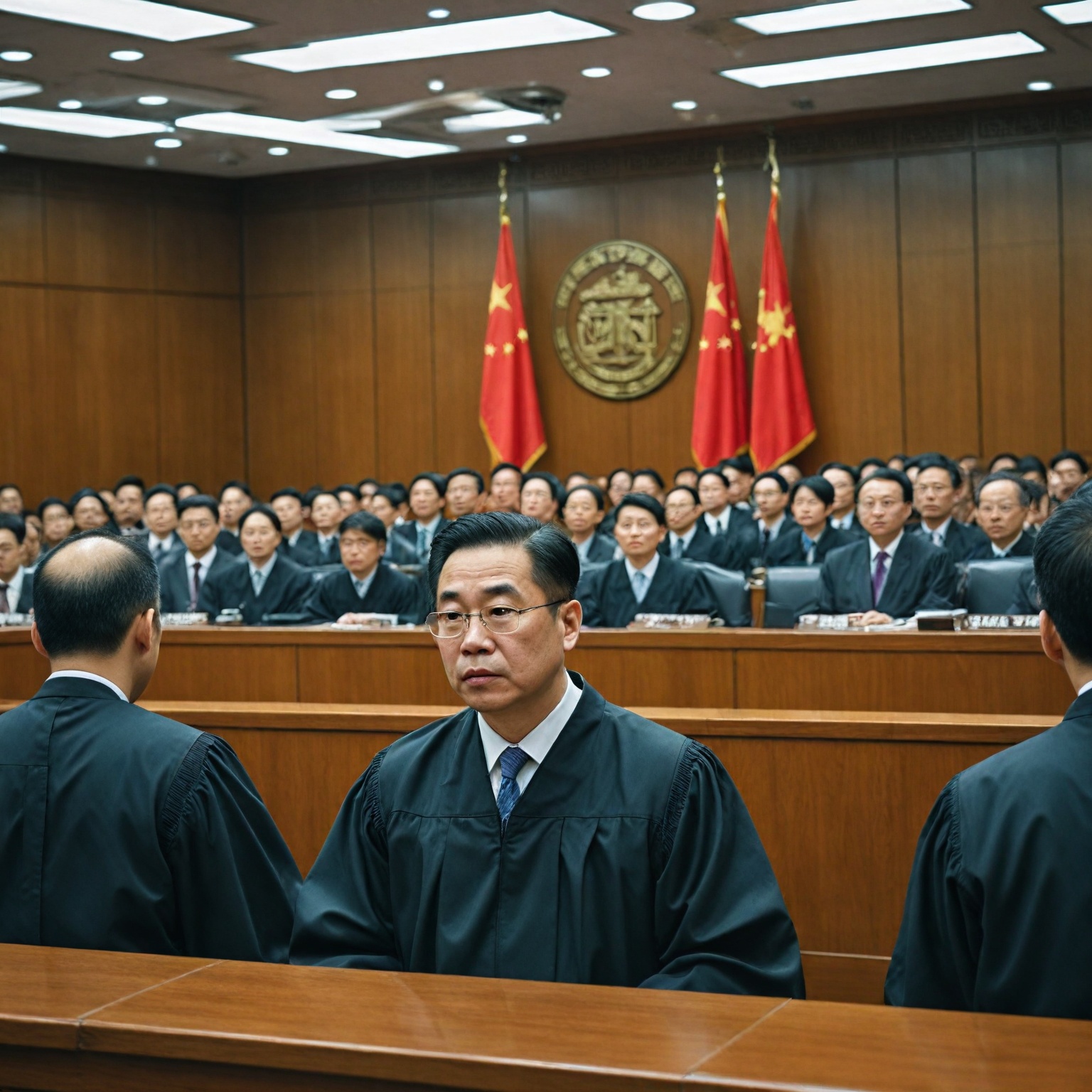
During the court proceedings in Jilin province, prosecutors presented comprehensive evidence, which Zhao and his defense counsel cross-examined. Zhao pleaded guilty and expressed remorse in his final statement, acknowledging his crimes. The court ultimately sentenced him to death with a two-year reprieve, a sentence that entails suspension of execution for two years, after which it may be commuted to life imprisonment if no further crimes are committed. This severe punishment underscores the Chinese government’s intensified efforts to enforce anti-corruption laws, particularly in critical industries that are vital to national security and technological advancement.
Political and Economic Context
The case of Zhao Weiguo must be understood within the broader political and economic landscape of China’s recent efforts to develop its semiconductor industry and intensify its anti-corruption campaign. The Chinese government has strategically prioritized semiconductors as a critical sector for national security and technological independence. Since the establishment of a dedicated semiconductor fund, approximately $30 billion has been invested, with an additional $20 billion planned, reflecting the state’s political mission rather than purely financial motivations. This approach, while demonstrating the government’s commitment, has also created vulnerabilities to corruption, as officials and executives navigate the complex interplay of political objectives and economic interests.
Zhao’s leadership at Tsinghua Unigroup—a state-backed enterprise emerging from Tsinghua University and positioned as a domestic semiconductor champion—occurred amid heightened tensions between China and the United States. U.S. restrictions on semiconductor exports and related manufacturing technologies have intensified China’s push for self-sufficiency in this sector, compelling Chinese firms to innovate under challenging circumstances. Despite these efforts, China remains several years behind leading global companies such as Nvidia and ASML.
The anti-corruption campaign spearheaded by the Chinese Communist Party’s Central Commission for Discipline Inspection (CCDI) is part of a wider national policy framework aimed at combating both overt and concealed forms of corruption. Described as a “protracted war,” the campaign reflects the state’s determination to root out bribery and malfeasance across all levels of governance and business, emphasizing institutional strengthening and meritocratic governance. Analysts suggest that while the campaign ostensibly targets factionalism and corruption to improve governance efficiency, its implementation is complex and has been linked to fluctuations in economic corruption and political dynamics under Xi Jinping’s administration.
In Zhao’s case, allegations include nepotism and the misuse of corporate resources, such as awarding profitable contracts to relatives and associates at inflated prices, which significantly harmed national interests. These actions underscore the risks inherent in politicized funding mechanisms and highlight the ongoing challenge China faces in balancing rapid industrial advancement with the enforcement of clean governance.
Reactions and Aftermath
The sentencing of Zhao Weiguo has elicited significant attention within both governmental and business circles, reflecting the broader context of China’s ongoing anti-corruption campaign. The Central Commission for Discipline Inspection (CCDI) highlighted Zhao’s misuse of power in handing over profitable businesses to relatives and associates, as well as engaging in transactions that caused substantial losses to national interests. This case is emblematic of the intensified scrutiny faced by senior officials and executives in state-backed enterprises, especially amid the restructuring challenges faced by Tsinghua Unigroup under Zhao’s leadership, which included debt accumulation and bond defaults prior to its takeover by state-backed venture capital firms.
The anti-corruption drive remains a central tenet of China’s political agenda, with authorities emphasizing a “protracted war” against all forms of corruption, including hidden and newly emerging types. Zhao’s sentencing aligns with the campaign’s dual focus on both high-level “tigers” and low-level “flies,” reaffirming the government’s commitment to rooting out graft in all sectors and at all levels of governance. This rigorous approach is intended to strengthen party discipline, enhance institutional integrity, and foster a meritocratic governance structure.
In the business environment, Zhao’s case serves as a cautionary tale for companies operating in China, underscoring the importance of robust compliance programs and internal controls in an evolving legal landscape marked by stricter anti-corruption laws and enhanced whistleblowing protections. The campaign’s persistence into 2024, including ongoing investigations and prosecutions in healthcare and other industries, signals sustained governmental resolve to combat corruption comprehensively.
Moreover, the case has reinforced the role of newly established supervisory bodies, such as the National Supervisory Commission, which consolidates various anti-corruption functions and operates at a high administrative level, reflecting institutional reforms aimed at more effective enforcement. Public and media discourse, while sometimes critical of perceived political motivations, generally recognizes the campaign’s significance in promoting transparency and accountability within China’s political and economic systems.
Impact and Consequences
The sentencing of Zhao Weiguo has had significant repercussions both within China’s semiconductor industry and the broader political landscape. As a key figure leading a state-backed enterprise originating from the prestigious Tsinghua University, Zhao’s downfall highlights the increasing scrutiny and enforcement of anti-corruption measures targeting high-level executives in strategic sectors.
In the semiconductor sector, Zhao’s case underscores China’s ongoing challenges in achieving technological self-sufficiency amid heightened international restrictions. The United States and other countries have imposed export controls on advanced chips and manufacturing tools, intensifying pressure on Chinese firms. Tsinghua Unigroup, as a leading domestic player in the chip industry, was pivotal to China’s ambitions to close the gap with global leaders like Nvidia and ASML. Zhao’s sentencing may disrupt ongoing efforts within this critical industry, complicating China’s drive for technological independence and innovation.
Politically, Zhao’s conviction is emblematic of the broader anti-corruption campaign initiated under Xi Jinping’s administration, which has targeted both bribery takers and givers with unprecedented rigor. The campaign’s scope extends beyond traditional graft cases to encompass new and hidden forms of corruption, as articulated by the Central Commission for Discipline Inspection (CCDI) in early 2023. By holding high-profile individuals accountable, the campaign aims to reinforce governance standards and restore public trust in state institutions.
Moreover, the campaign’s impact on economic sectors, particularly the financial industry, has been profound. Corruption in these areas often involves sophisticated methods that pose significant risks to national financial security. The government’s firm stance in investigating and punishing corrupt behavior reflects a broader effort to curb undesirable work styles and improve officials’ accountability, thereby supporting economic and social development.
Internationally, Zhao’s case and related anti-corruption efforts have had ripple effects. For example, the crackdown on corrupt practices associated with smuggling and illicit trade routes has influenced global markets, as seen in the decline of the fur industry linked to China’s tightened controls under Xi’s campaign. This demonstrates how domestic anti-corruption measures can extend their influence beyond China’s borders, affecting global economic patterns and trade relationships.
The content is provided by Sierra Knightley, 11 Minute Read


