
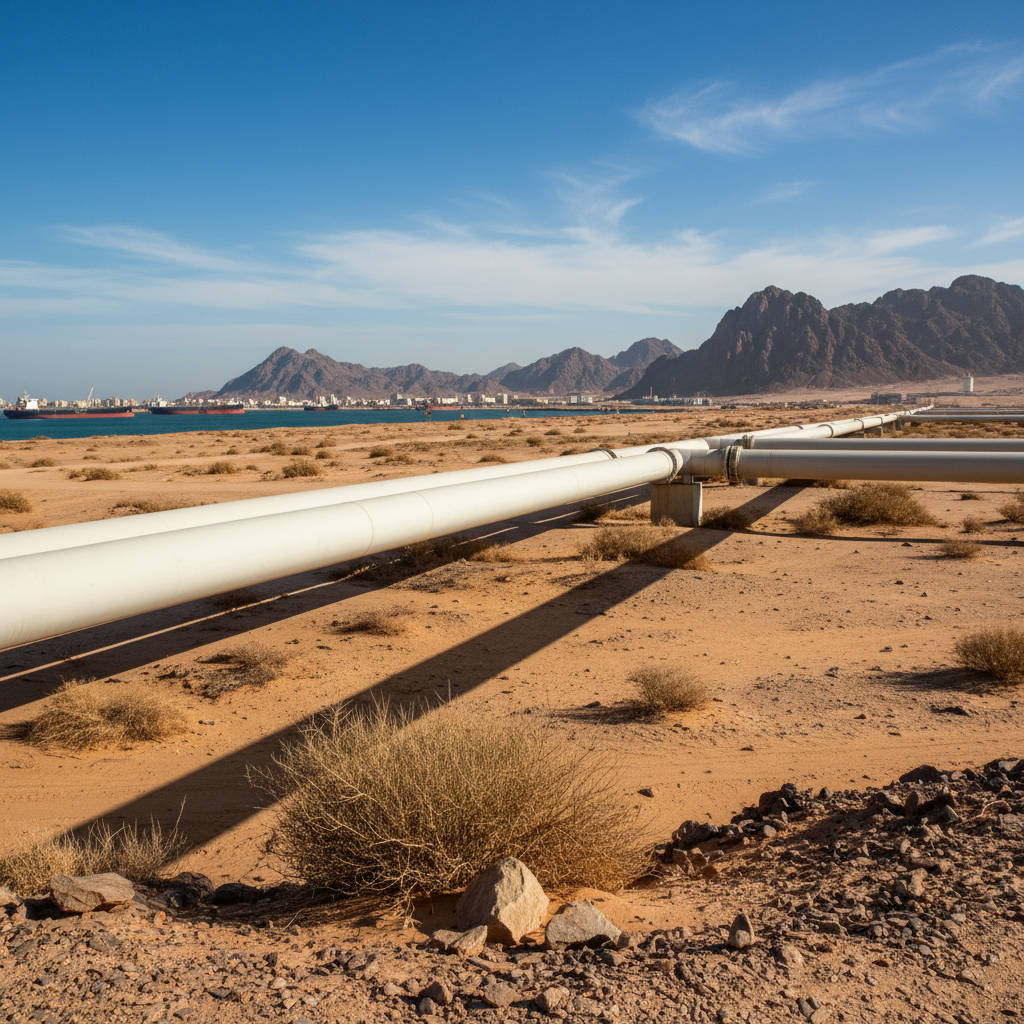
Summary of the Petroline’s Role
The East-West Crude Oil Pipeline, or Petroline, serves as a vital conduit for transporting Saudi crude oil to the Red Sea port of Yanbu, circumventing the geopolitically sensitive Strait of Hormuz. Established in 1981 during the Iran-Iraq War, this pipeline addresses concerns over potential disruptions in the Strait, enabling about 70% of Saudi Arabia’s crude exports. Yanbu has evolved into a critical export and refining hub, ensuring continuity of supply amid regional tensions.
Geopolitical Context and Strategic Necessity
The Strait of Hormuz is crucial for global oil transport, with nearly 20 million barrels daily traversing this chokepoint. Heightened geopolitical tensions, especially between Iran and its neighbors, pose risks of shipping disruptions. The Petroline offers a strategic alternative, but the route through the Bab el-Mandeb Strait introduces new security challenges, especially with ongoing conflict threats from Houthi rebels. The effectiveness of bypass strategies necessitates evaluation against the backdrop of a volatile geopolitical landscape.
Operational Details of the Pipeline
Stretching approximately 1,200 kilometers, the Petroline was designed to secure oil exports while minimizing dependency on maritime routes. Initially comprised of two pipelines, expansions have increased capacity from 2 million barrels per day to 5 million, with goals for further enhancement. This infrastructure allows Saudi Arabia to effectively respond to disruptions, particularly in times of heightened tension in the region, thus securing a significant portion of its export volumes.
Yanbu Port Infrastructure Significance
Yanbu Port, strategically located on the Red Sea, serves as a key shipping hub for crude oil and various goods. The port’s infrastructure includes facilities for a wide range of cargo types, supporting Saudi Arabia’s export strategy, especially during geopolitical crises. Its capacity to accommodate larger vessels has reinforced the port’s role as one of the world’s major oil export hubs, particularly with increased reliance on the East-West pipeline.
Future Considerations and Challenges
The future of the Petroline and related infrastructure hinges on emerging regional dynamics and ongoing geopolitical conflicts. Recent threats have triggered adjustments in operational strategies, necessitating a reassessment of the pipeline’s capacity and effectiveness against new risks. As Saudi Arabia continues to expand its energy infrastructure to enhance resilience, attention must also be directed towards securing its critical maritime routes in light of evolving challenges.
Economic Implications of the Pipeline
The East-West pipeline enhances Saudi Arabia’s oil export reliability, reducing the dependency on the Strait of Hormuz amidst geopolitical uncertainties. This logistical flexibility not only bolsters investor confidence but also positions the kingdom as a stable supplier in global markets. The challenges associated with securing these alternative routes compel a reevaluation of the pipeline’s strategic value and the necessity for ongoing investments to mitigate risks.
The content is provided by Blake Sterling, 11 Minute Read


