
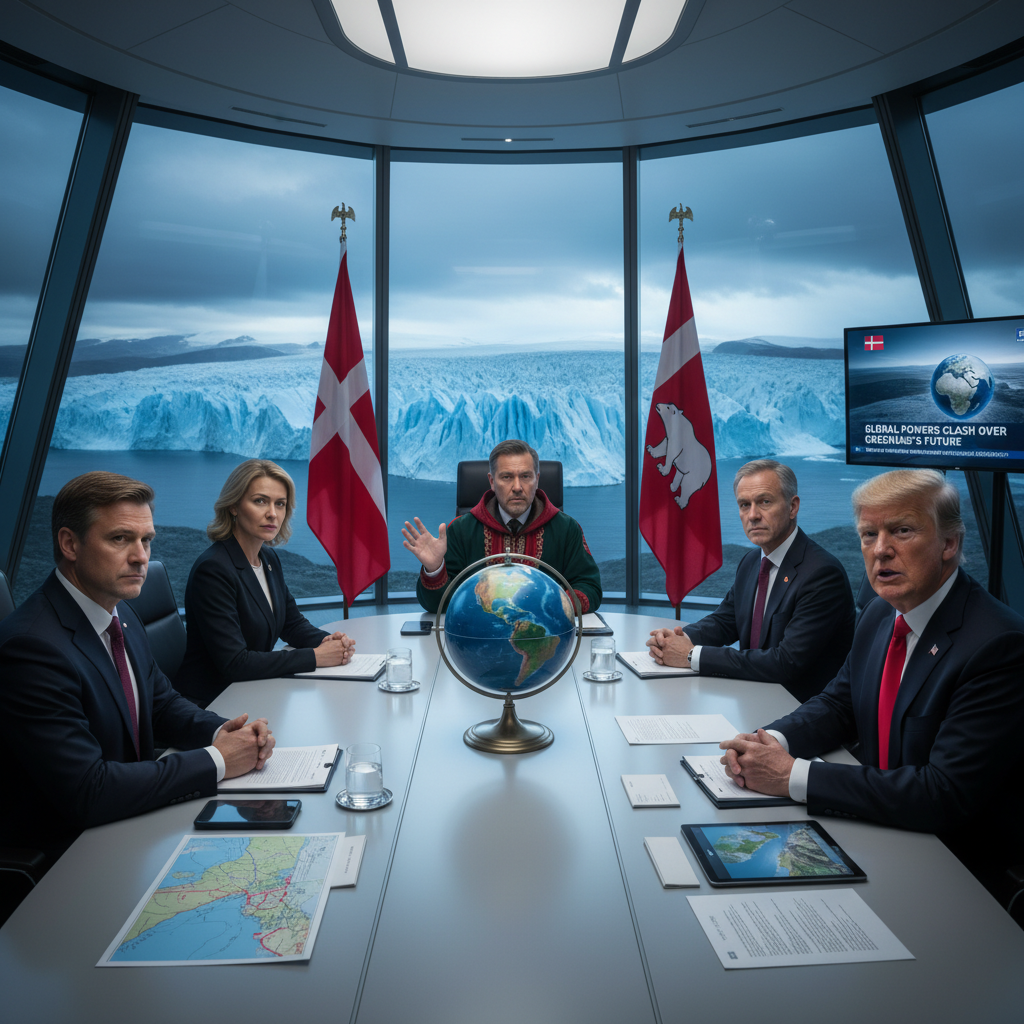
Trump’s Declaration on Greenland Control
In early 2026, Donald Trump declared U.S. control over Greenland as non-negotiable, heightening geopolitical tensions surrounding the territory. This assertion reflects the U.S. desire to counteract the influence of China and Russia in the strategically valuable Arctic region, known for its resources and military significance. Trump’s statement met substantial backlash from Danish and Greenlandic officials, who emphasized their commitment to sovereignty and criticized any notion of U.S. annexation, calling for diplomatic engagement instead.
Historical Context and Sovereign Disputes
Greenland has attracted global interest for its strategic location and abundant natural resources. Historically under Danish control, Greenland has sought increased autonomy, with aspirations for independence emerging prominently in recent years. The U.S. has maintained a military presence, viewing Greenland as critical for both national and NATO security, and discussions about U.S. acquisition date back over a century. Recent U.S. efforts, like reopening a consulate, are aimed at enhancing influence, emphasizing its strategic value while raising concerns about alliance cohesion.
Reactions to Trump’s Announcement
The announcement prompted strong domestic responses from Greenland and Denmark. Greenlandic leaders staunchly opposed U.S. control, advocating for self-determination and emphasizing their distinct identity. Danish Prime Minister Mette Frederiksen faced a challenging diplomatic landscape, focusing on cooperation with the U.S. while reaffirming Greenland’s sovereignty. Bipartisan concerns arose within the U.S. Congress regarding any military aggression toward Greenland, calling for diplomatic resolutions over confrontational strategies.
International Response to Greenland’s Status
The international community reacted critically, with allies expressing solidarity with Denmark and Greenland in defense of sovereignty. China rejected claims of interest in Greenland, deflecting potential accusations of expansionism. Denmark’s condemnation of the U.S. stance illustrated rising tensions in transatlantic relations, with many European countries emphasizing the need for international laws governing sovereignty. Discussions among NATO allies included strengthening military presence amidst heightened strategic competition in the Arctic.
Strategic Importance and National Security
Greenland plays a vital role in U.S. national security due to its position along key shipping routes and the availability of natural resources. The island’s mineral wealth has strategic implications for reducing reliance on adversarial nations like China. Despite Trump’s claims linking military presence to national security, the emphasis on Greenland’s resources reveals underlying economic motivations. The importance of diplomatic approaches in managing these interests aligns with efforts to maintain NATO cohesion while safeguarding Greenlandic rights.
Impact on U.S.-European Relations
The dispute over Greenland has strained relations between the U.S. and its European allies, prompting concerns about unifying security approaches. Denmark’s assertive diplomatic stance echoes a commitment to uphold international law and restrict unilateral actions that might disrupt regional stability. The incident stresses the importance of multilateral cooperation in addressing evolving geopolitical challenges in the Arctic, fostering discussions on legal frameworks that support both strategic interests and the islanders’ self-determination.
Public Sentiment and Autonomy Aspirations
Greenland’s public overwhelmingly favors independence, consistently rejecting any U.S. control proposals. The desire for sovereignty is deeply entrenched in local culture and history, as many Greenlanders advocate for full autonomy from Danish governance. This sentiment is critical in shaping political discourse around Greenland’s future and underscores the need for respectful international dialogue. Recent developments have prompted an increased focus on Greenland’s identity and the social implications of external pressures amidst geopolitical rivalries.
Legal Framework and Sovereignty Issues
Denmark’s historical sovereignty over Greenland is well-established, subject to international law that supports self-governance while maintaining legal authority. Any potential movement toward independence would require complex legal processes involving Denmark, which has reiterated its commitment to Greenland’s autonomy. Furthermore, established legal norms affirming the need for diplomatic engagement highlight the vital role of international protocols in managing this sensitive issue without infringing on sovereign rights.
The content is provided by Sierra Knightley, 11 Minute Read