
Summary
IndiGo, India’s largest domestic airline controlling nearly 60 percent of the market, experienced a significant operational crisis beginning in November 2025, triggered by new Flight Duty Time Limitation (FDTL) regulations that redefined night duty hours and restricted pilot landings per day. The airline struggled to adapt its crew rostering and internal planning systems to these stricter norms, leading to widespread flight cancellations and delays affecting thousands of passengers across major Indian airports. This disruption, described as a “system-wide reset,” severely impacted IndiGo’s operational capacity, reducing daily flights from around 2,200 to fewer than 1,700 during the peak of the crisis.
Moody’s Investors Service issued a critical report highlighting IndiGo’s failure to prepare adequately for the regulatory changes despite having over a year’s notice, citing serious lapses in planning, oversight, and human resource management as root causes of the disruptions. The agency downgraded IndiGo’s human capital score and flagged potential financial losses, reputational damage, and increased regulatory scrutiny, although it affirmed the airline’s overall credit rating. In response, regulatory authorities, including the Directorate General of Civil Aviation (DGCA), issued show-cause notices to IndiGo’s top management and mandated timely passenger refunds and fare caps to mitigate the crisis’s impact.
The crisis exposed systemic issues within IndiGo’s lean operational model and crew scheduling strategies, which were unable to absorb the tightened regulatory environment and additional challenges such as seasonal weather disruptions. Passenger dissatisfaction mounted amid frequent cancellations and delays, with widespread calls for accountability from both government officials and the public. IndiGo’s management acknowledged the planning failures while emphasizing ongoing recovery efforts to restore full flight operations by mid-December 2025.
This episode not only underscored vulnerabilities in IndiGo’s internal planning and resource management but also triggered industry-wide concerns about compliance readiness and the robustness of India’s aviation sector in adapting to evolving regulatory frameworks. Moody’s critique and subsequent regulatory actions have prompted intensified oversight, with regular reviews of IndiGo’s compliance and operational improvements aimed at preventing recurrence of such disruptions.
Background
IndiGo, one of India’s largest private airlines controlling nearly 60 percent of the domestic market, faced a severe operational crisis starting in early November 2025. The disruption was primarily triggered by the introduction of stricter Flight Duty Time Limitation (FDTL) regulations on 1 November, which redefined night duty hours and reduced the number of allowable landings pilots could perform in a day. These Phase 2 FDTL norms mandated that all flying between midnight and 6 a.m. be counted as night duty, significantly impacting crew scheduling and operational capacity.
IndiGo struggled to adjust its crew rostering and internal planning systems to comply with these new rules in time, resulting in massive flight cancellations and delays that affected thousands of passengers. The airline operated around 1,500 flights on a recent Saturday and 1,650 on Sunday, reconnecting 135 out of 138 destinations, but still far from its usual 2,200 daily flights. This disruption was described as a “system-wide reset” triggered by the airline’s lean operating model being overwhelmed by the new regulations.
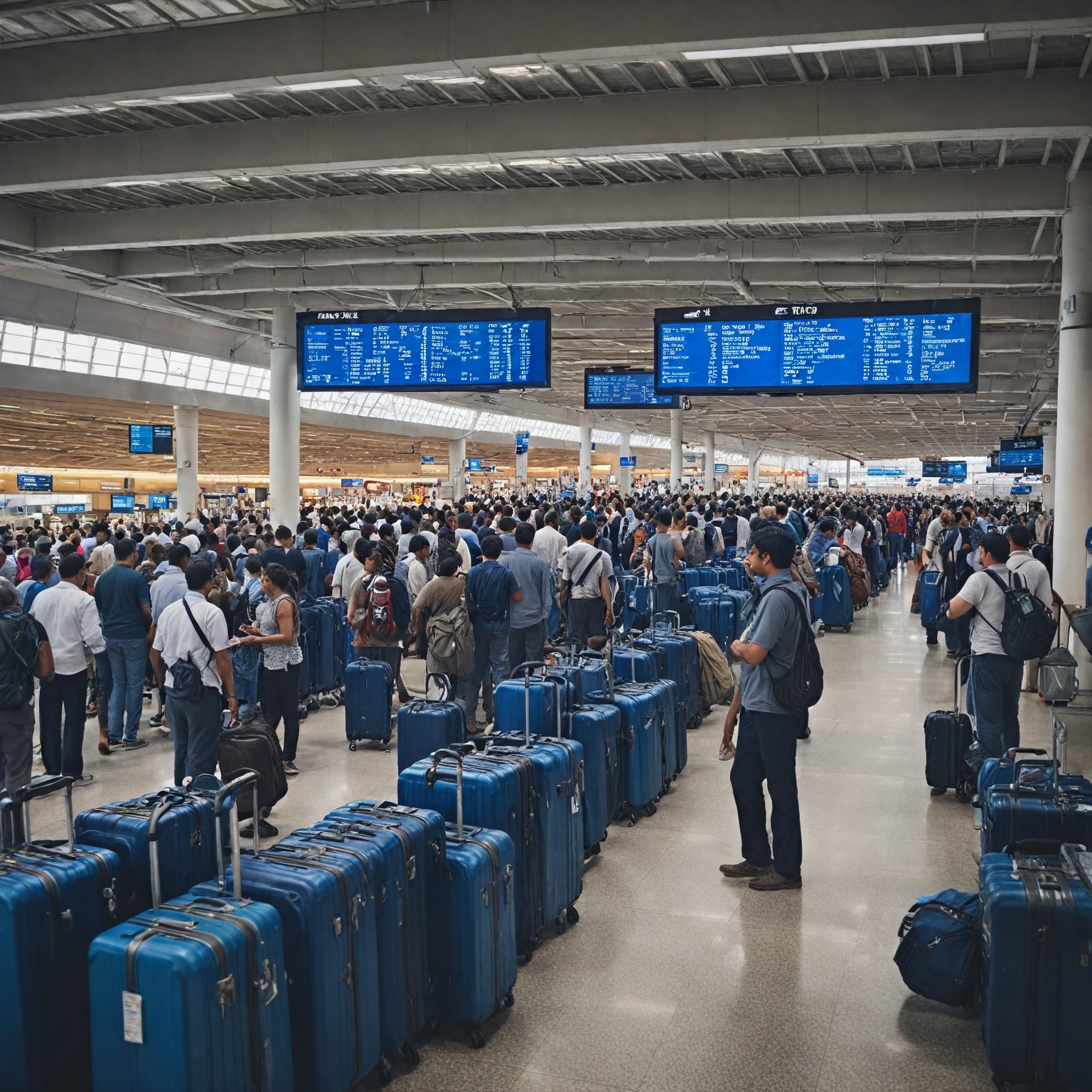
The crisis led to widespread passenger dissatisfaction, with cancellations running into the thousands daily and travelers expressing frustration over the uncertainty and inconvenience caused. For many, even hearing a mechanical announcement of a delay became a sign of hope that their flight existed and travel was still possible amid the chaos.
In response to the crisis, the Directorate General of Civil Aviation (DGCA) issued show-cause notices to IndiGo’s top management, including CEO Pieter Elbers and COO Isidro Porqueras, seeking explanations for the large-scale operational failures that indicated significant lapses in planning, oversight, and resource management. The Ministry of Civil Aviation capped airfares to control a surge in ticket prices due to the flight disruptions and mandated that IndiGo complete refunds for affected passengers by 7 December without extra charges.
Union Civil Aviation Minister Ram Manohar Naidu attributed the disruptions to problems in crew rostering and internal planning systems, emphasizing that there had been no compromise on the Flight Duty Time Limitations themselves. Meanwhile, Moody’s Investors Service highlighted the incident as a credit negative, citing serious gaps in IndiGo’s preparedness for regulatory changes despite having over a year to adjust. The rating agency pointed to the large-scale cancellations and delays as evidence of the airline’s significant planning and operational oversight failures, which have led to reputational harm and financial strain for IndiGo.
Moody’s Report
Moody’s Investors Service issued a critical report on IndiGo following widespread flight disruptions attributed to significant lapses in planning and operational oversight. The disruptions occurred despite the airline being aware of revised Flight Duty Time Limitations (FDTL) regulations for over a year. Moody’s highlighted that IndiGo failed to adequately adjust its crew rostering and internal planning systems in response to these regulatory changes, which led to large-scale cancellations and delays affecting thousands of passengers.
The rating agency downgraded IndiGo’s human capital category score from 3 to 4, citing the adverse impact of delayed hiring and insufficient crew availability on the airline’s operations. Although Moody’s affirmed IndiGo’s stable issuer rating of Baa3, it underscored the credit negative implications of the disruptions, pointing to potential financial losses from reduced revenue, refunds, compensation costs, and possible penalties from regulatory authorities such as the Directorate General of Civil Aviation (DGCA).
Moody’s also raised concerns about potential reputational damage to IndiGo, particularly affecting its global code-share partnerships. While no formal penalties had been imposed at the time of the report, the agency warned that regulatory actions remain a possibility if compliance issues persist. The Ministry of Civil Aviation (MoCA) directed IndiGo to process all customer refunds by a specified deadline without levies, emphasizing the importance of passenger protection during this period.
In response to the operational failures, Moody’s stressed the need for IndiGo to submit detailed reports outlining crew utilization, measures to enhance crew availability, and revised crew planning strategies. The airline was also required to provide a 30-day roadmap for full compliance with FDTL regulations, including timelines to achieve complete adherence.
Despite the operational setbacks, Moody’s noted that IndiGo’s strong fundamentals — including its dominant domestic market share, favorable macroeconomic conditions, and sustainable leverage — continue to support its current credit rating. However, the full financial impact of the disruptions remains uncertain as IndiGo adjusts its operations to comply with the new regulatory environment.
Impact of Flight Disruptions
The widespread flight cancellations and delays experienced by IndiGo over a six-day period caused significant disruption to thousands of passengers across India’s major airports, including Delhi, Mumbai, Bengaluru, Hyderabad, and Chennai. With over 1,000 flights reportedly affected within just a few days, this event represented one of the most severe operational crises in the airline’s history. The disruptions forced many travelers to alter or abandon plans related to weddings, business meetings, and family commitments, prompting widespread frustration and calls for accountability on social media platforms.
The operational breakdown had broader implications beyond passenger inconvenience. As India’s largest domestic carrier, holding nearly two-thirds of the passenger market, IndiGo’s failures triggered cascading cancellations and delays, thereby affecting the entire domestic aviation ecosystem. Airports such as Delhi’s Indira Gandhi International and Hyderabad’s Rajiv Gandhi International witnessed particularly high cancellation numbers, with Delhi alone recording 134 flight cancellations on one day. This widespread impact amplified scrutiny from regulatory authorities and the public alike.
Financially, Moody’s Ratings warned that the disruptions, stemming from IndiGo’s inadequate preparation for the tighter Flight Duty Time Limitation (FDTL) regulations, could result in significant monetary losses and reputational damage to the airline. The airline was ordered by the Ministry of Civil Aviation to complete all customer refunds by early December without levying rescheduling charges, adding to the financial strain. Furthermore, show-cause notices were issued to IndiGo’s CEO and COO, signaling potential penalties if compliance issues persisted. Despite no penalties being imposed immediately, the regulatory environment remained strict, reflecting the seriousness of the crisis.
The disruptions also underscored systemic issues within IndiGo’s operational planning, especially regarding crew rostering and resource management. The crisis highlighted a lack of proactive measures to align with regulatory changes communicated well in advance, exposing critical planning and oversight gaps that not only affected IndiGo but also had ripple effects throughout the Indian aviation sector.
In response, the government and regulatory bodies emphasized passenger protection, mandating transparent communication, timely refunds, and adherence to passenger rights norms during this period of disruption. These measures aimed to mitigate the immediate impact on travelers while IndiGo worked toward restoring full operational schedules.
Responses to Moody’s Critiques and Flight Disruptions
Following Moody’s critical assessment of IndiGo’s flight disruptions, various stakeholders including regulatory authorities, the airline’s management, and government officials responded to address the situation and mitigate its impacts. The Directorate General of Civil Aviation (DGCA) took immediate regulatory actions by issuing show-cause notices to IndiGo’s CEO Pieter Elbers and COO Isidro Porqueras, demanding explanations within 24 hours for the operational failures that resulted from significant lapses in planning, oversight, and resource management despite more than a year’s notice of the revised Flight Duty Time Limitations (FDTL). The DGCA also mandated IndiGo to complete all passenger refunds by December 7 without additional charges, and ordered the airline to ensure prompt delivery of misplaced baggage within 48 hours, emphasizing passenger rights and regulatory compliance.
IndiGo’s management acknowledged the disruptions were due to challenges in crew rostering and internal planning systems but maintained that compliance with the new FDTL norms was not compromised. CEO Pieter Elbers reported that operational recovery was underway, with approximately 1,650 of the airline’s 2,200 daily flights resuming and a full schedule expected by mid-December, highlighting efforts to stabilize services after the crisis. The airline has refunded approximately Rs 827 crore worth of tickets and returned around 4,500 misplaced bags to affected passengers, signaling attempts to restore customer trust and service reliability.
Government officials, including Union Civil Aviation Minister Ram Manohar Naidu, publicly recognized that the disruptions stemmed from IndiGo’s crew scheduling and planning issues. He reinforced that strict Civil Aviation Requirements (CARs) are in place to protect passengers from delays and cancellations and that airlines must adhere to these regulations. Additionally, the Ministry of Civil Aviation warned against inflated airfares during the disruption, invoking regulatory powers to ensure fair pricing, including capping fares on certain routes, to prevent exploitation of passengers amid the crisis.
Moody’s response to the ongoing situation included lowering IndiGo’s human capital score, citing slow hiring and challenges in crew management despite the absence of formal employee unions, as pilots exercise significant collective bargaining power through associations. The rating agency also indicated that further regulatory actions could increase compliance costs and impose operational restrictions, potentially affecting investor confidence. Meanwhile, the DGCA has committed to reviewing IndiGo’s operational improvements every 15 days, requiring regular submissions of crew planning and roster data to ensure compliance and prevent recurrence of such disruptions.
Analysis and Expert Opinions
Moody’s has been a prominent voice in analyzing the widespread flight disruptions experienced by IndiGo, identifying “significant lapses in planning and oversight” as key factors behind the crisis. The agency criticized IndiGo’s parent company, InterGlobe Aviation, for failing to adequately prepare for new pilot duty regulations that had been known to the industry for over a year, highlighting a disconnect between regulatory awareness and operational readiness. Moody’s downgraded IndiGo’s human capital score from 3 to 4, attributing this to slow hiring processes that negatively affected flight operations during the period of disruption.
The regulatory environment also played a crucial role. The introduction of Phase 2 of the Flight Duty Time Limitations (FDTL) norms on November 1, 2025, which imposed stricter night-duty definitions and reduced allowable landings, overwhelmed IndiGo’s lean operational model and triggered a systemic reset. These changes compounded the crisis alongside weather disruptions such as winter fog at major airports, further impacting IndiGo’s on-time performance, which dropped sharply from 84% in October to 68% in November. The Directorate General of Civil Aviation (DGCA) issued show-cause notices to top IndiGo executives, reflecting regulatory scrutiny amid operational challenges.
Beyond operational critiques, Moody’s raised concerns about potential reputational damage and financial strain for IndiGo, especially considering its position as India’s largest domestic carrier with nearly two-thirds of the passenger market share. The airline’s inability to manage the crisis effectively also raised alarms among industry stakeholders, with the Federation of Indian Pilots attributing disruptions to IndiGo’s “prolonged and unorthodox lean manpower strategy,” particularly within flight operations. The pilots’ union suggested that the airline might leverage flight delays and cancellations as leverage in negotiations with regulators, indicating underlying tensions within the sector.
Political opposition further intensified scrutiny, pressing the government for transparency regarding the nationwide disruption and attributing the crisis to administrative failures. These expert opinions and analyses collectively underline a complex interplay of regulatory changes, resource management shortcomings, and strategic planning failures that culminated in one of the most severe operational disruptions in IndiGo’s history.
The content is provided by Jordan Fields, 11 Minute Read