Summary
The Meta Neural Band is a pioneering wrist-worn neural interface device developed by Meta (formerly Facebook) that utilizes advanced surface electromyography (sEMG) sensors to detect electrical motor nerve signals sent from the brain to the hand muscles. Unlike traditional virtual reality (VR) controllers or camera-based hand tracking systems, the Neural Band captures subtle muscle activations and micro-movements directly from the wrist, enabling precise, low-latency translation of intended gestures into digital commands without external sensors or physical buttons. This non-invasive technology offers a natural and seamless input method for augmented reality (AR), virtual reality (VR), and other connected digital environments, positioning it at the forefront of consumer neural interface innovations.
The Neural Band traces its origins to CTRL-labs, a startup acquired by Meta in 2019 for an estimated $500 million to $1 billion, whose founders and researchers continue to lead Meta’s neuromotor interface efforts. Meta envisions the device as a key component of future AR ecosystems, complementing smart glasses and wearable technologies by providing intuitive gesture control through finger taps, swipes, and wrist rotations. The technology’s capacity to decode single-neuron motor commands with precision approaching that of invasive brain implants underscores its significance in advancing human-computer interaction.
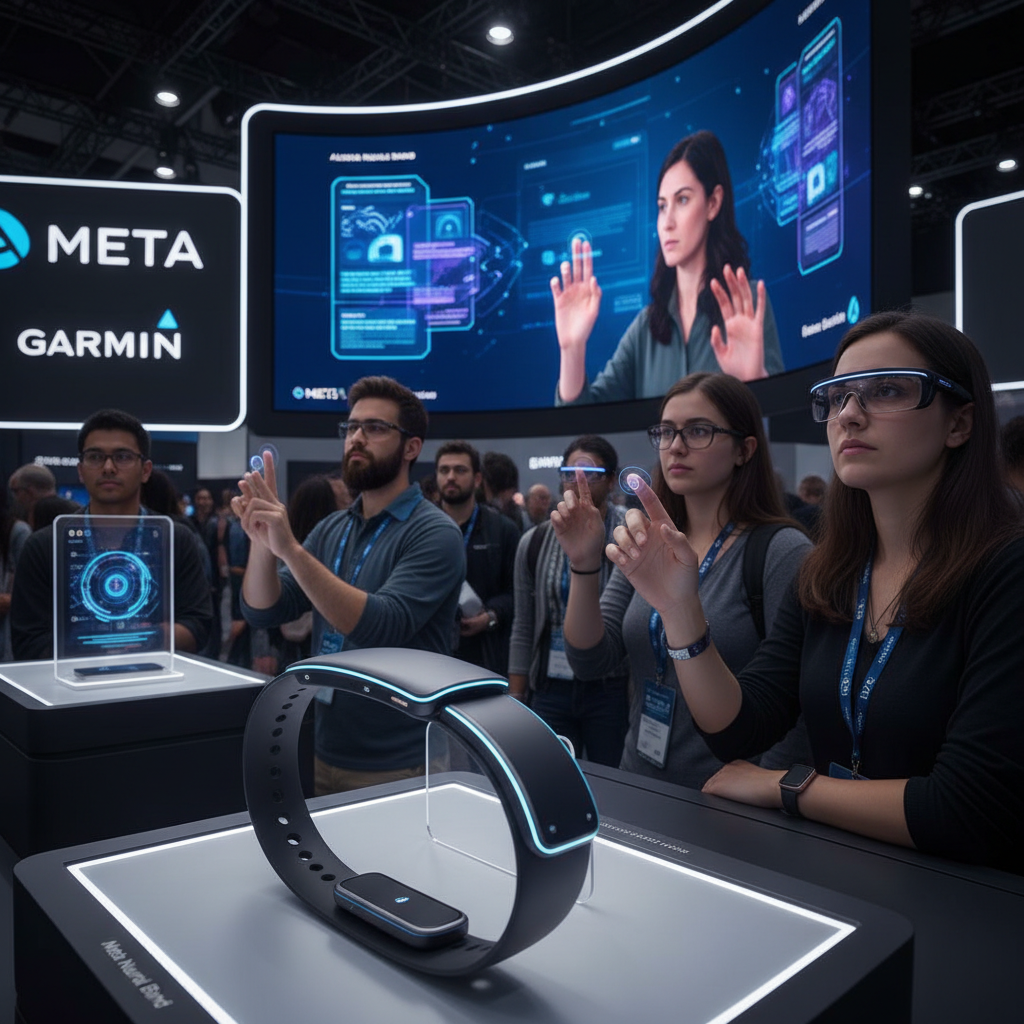
A notable demonstration of the Neural Band’s capabilities occurred at CES 2026 through a collaboration between Meta and Garmin, where the device was integrated with Garmin’s Unified Cabin automotive platform to enable hands-free, gesture-based control of in-vehicle infotainment systems. This proof-of-concept showcased how subtle finger movements detected by the Neural Band could replace traditional touchscreens or voice commands, illustrating the technology’s versatility and potential impact beyond AR/VR into automotive and smart environments.
Despite its promising advancements, the Neural Band faces challenges including signal variability across diverse users, privacy concerns over neural data, and the technical complexities of delivering reliable, inclusive, and user-friendly experiences. Nevertheless, Meta’s continued investment in machine learning, ergonomic design, and ethical oversight reflects a strategic commitment to developing accessible neural interface technologies that may fundamentally transform how humans interact with digital and physical worlds.
Background
Meta’s Neural Band technology is built on advanced electromyography (EMG) sensors that detect electrical motor nerve signals transmitted from the brain to the hand muscles. Unlike traditional virtual reality (VR) controllers that rely on physical buttons and external motion sensors, these neural wristbands provide a more natural and seamless way to interact with digital environments by interpreting subtle hand gestures without requiring external cameras or additional sensors. This EMG-based approach enables the Neural Band to capture single-neuron activity with a precision previously limited to invasive brain implants, positioning the device at the cutting edge of both neuroscience and consumer electronics.
The origins of the Neural Band trace back to the startup CTRL-labs, which developed innovative wrist-worn EMG devices capable of translating neural motor signals into digital commands. In 2019, Meta (formerly Facebook) acquired CTRL-labs in a deal reportedly valued between $500 million and $1 billion, integrating the company’s expertise into its Reality Labs division. Thomas Reardon, founder of CTRL-labs, now serves as the director of Neuromotor Interfaces at Meta Reality Labs. Reardon has emphasized that the technology focuses exclusively on motor signals related to hand movements and is not designed for mind control or reading thoughts.
Meta envisions the Neural Band as a key input device for future augmented reality (AR) and VR applications, with plans to integrate the wristband into an ecosystem of wearable technologies including AR glasses intended for all-day use as a smartphone replacement. By capturing and decoding intended hand gestures such as finger taps, swipes, and wrist rolls, the Neural Band offers a lightweight and intuitive interface for navigating digital content without traditional input devices.
Further advancing the technology, Meta has demonstrated applications beyond immersive realities. In collaboration with Garmin, an automotive OEM proof-of-concept was unveiled at CES 2026, showcasing the Neural Band’s integration with Garmin’s Unified Cabin suite. This demonstration enabled passengers to control vehicle infotainment systems through hand gestures detected by the EMG sensors on the wrist, illustrating new possibilities for hands-free, gesture-based interaction in automotive environments.
Meta’s research into neural interfaces reflects a long-term commitment to pushing the boundaries of human-computer interaction, combining machine learning algorithms with robust sensor design to develop systems that work across diverse users. Ongoing projects explore equity and accessibility, with hardware prototypes and software algorithms being shared with select partners under ethical oversight to expand the technology’s real-world impact.
Development
The development of Meta’s Neural Band technology builds upon extensive research in surface electromyography (sEMG) and machine learning algorithms aimed at creating robust, user-inclusive human-computer interaction (HCI) devices. Initial efforts focused on designing algorithms capable of accurately interpreting muscle signals across individuals with diverse wrist anatomies and motor abilities, ensuring the technology’s adaptability and accessibility. The research progressed from experimental prototypes to practical product implementations, such as the Orion system, with continued refinement enabling the sharing of internally developed systems with external partners under ethical approvals to explore equity-related use cases.
The Neural Band employs sEMG sensors that detect electrical activity generated by muscle contractions at the wrist. These signals are processed and translated into digital commands using advanced machine learning models, including Support Vector Machines (SVM), K-Nearest Neighbors (KNN), Random Forest (RF), and Artificial Neural Networks (ANN). The preprocessing pipeline involves amplification, band-pass filtering to isolate relevant frequencies, and noise reduction techniques such as Fast Fourier Transformation (FFT) to enhance signal clarity. This sophisticated signal processing enables rapid and reliable gesture recognition, with response times measured in milliseconds and minimal need for individual calibration—a significant advancement over prior EMG interfaces.
To ensure usability for a broad user base, the Neural Band’s design integrates ergonomic electrode positioning and calibration algorithms supporting both left- and right-handed users, allowing the device to be donned and removed effortlessly within seconds. Machine learning models powering the system were trained on extensive datasets collected from consenting participants, enabling the band to deliver out-of-the-box functionality without requiring users to undergo lengthy setup procedures.
The collaboration between Meta and Garmin further accelerated development by integrating the Neural Band with Garmin’s Unified Cabin platform, showcased as an automotive OEM proof-of-concept at CES 2026. This integration enables in-vehicle infotainment control through subtle wrist-based EMG gestures, providing a silent, low-effort alternative to traditional voice commands and touch inputs. The system supports multiple users within the vehicle environment, enhancing personalized and lean-back entertainment experiences. This partnership exemplifies the ongoing innovation narrative, leveraging wearable EMG technology to redefine digital interaction paradigms across different contexts and industries.
Demonstration Event
The groundbreaking demonstration of the Meta Neural Band technology took place at CES 2026 in Las Vegas, where Meta and Garmin unveiled a proof-of-concept integrating the wrist-based electromyography (EMG) device with Garmin’s Unified Cabin suite of in-vehicle infotainment systems. This event showcased how subtle finger gestures detected by the Neural Band—specifically movements of the thumb, index, and middle fingers—can be translated into commands such as clicks, scrolls, and dials to control vehicle infotainment functions without the need for traditional physical input devices.
The demonstration highlighted the potential of the Neural Band to enable a “lean-back entertainment experience” by allowing multiple passengers to interact with digital vehicle displays through low-effort micro-movements sensed at the wrist, providing an alternative to voice commands or touchscreens which may suffer from privacy or fatigue issues. By detecting muscle activations invisible to outside observers and interpreting “neural clicks” based on motor neuron activity before actual movement, the device allows silent, rapid, and precise interaction with AR interfaces and digital menus.
Garmin’s Unified Cabin 2026 digital cockpit featuring the Neural Band was presented by invitation only at the Garmin booth, demonstrating new features such as Digital Key, AI Virtual Assistant, seat-scoped audio and visuals, enhanced personalization, Cabin Chat, Cabin Lighting Show, and Personal Audio Sphere. These innovations are tailored to meet the needs of specific automotive original equipment manufacturers (OEMs), marking a significant step toward incorporating wearable neural interface technology into future automotive environments.
This event underscored the collaborative effort between Meta and Garmin to push the boundaries of human-computer interaction by leveraging machine learning algorithms capable of accurately classifying subtle EMG gesture patterns without requiring individual calibration, thus making the technology more accessible and practical for widespread use. The demonstration was part of a broader narrative in Meta’s development of non-invasive neural interfaces, building upon research and prototypes aimed at delivering inclusive and intuitive input methods for AR and extended reality devices.
User Interaction and Supported Functionalities
The Meta Neural Band leverages electromyography (EMG) technology to interpret electrical motor nerve signals sent from the brain to the hands, enabling precise tracking of hand and finger gestures without relying on external cameras or sensors. This wrist-worn device detects subtle muscle activations, including micro-movements and even imagined motions prior to actual movement, allowing for silent, low-effort, and highly private interactions with digital environments. By processing these signals in real-time through machine learning algorithms trained on thousands of gesture samples, the band can translate complex patterns into accurate computer commands with minimal latency.
Unlike traditional input methods such as camera-based hand tracking, voice commands, or handheld controllers, the Neural Band provides a non-invasive interface that remains effective even for users with limited mobility or fewer than five fingers, expanding accessibility. The technology supports intuitive gesture recognition, including simple actions like clicks, scrolls, and dials, as well as more advanced inputs such as finger handwriting movements that can be converted into digital text. Haptic feedback integrated within the band confirms successful gesture execution, enhancing user experience.
Functionally, the Neural Band enables a broad range of interactions across different contexts. It powers the AR interface of Meta’s Orion smart glasses, allowing wearers to navigate apps and manipulate virtual objects seamlessly through finger twitches invisible to outside observers. In addition, Meta and Garmin have demonstrated the band’s capabilities in automotive environments, where passengers can control infotainment systems using thumb, index, and middle finger gestures detected by the EMG sensors, creating a lean-back entertainment experience without physical controllers. Beyond these applications, prototype experiences have also explored controlling home devices, illustrating the band’s potential as a versatile input device across multiple platforms.
By combining machine learning and neuroscience through a process called “co-adaptive learning,” the Neural Band interface adapts to individual differences in physiology and gesture patterns, enhancing accuracy and ease of use for diverse users. This innovation signals a significant step towards an intuitive, frictionless interface between humans and computers, transforming how users engage with extended reality, the metaverse, and connected devices in everyday life.
Applications
Meta’s wrist-based neural band technology, which utilizes surface electromyography (EMG) to detect electrical muscle signals around the wrist, has been developed to enable intuitive and inclusive human-computer interaction (HCI) across a variety of use cases. One of the primary applications demonstrated is in controlling augmented reality (AR) devices, such as the Orion AR glasses, where the band allows users to swipe, click, and scroll through content without the need for external controllers, offering a seamless and natural input method.
Beyond AR and VR ecosystems, the neural band has been integrated into automotive environments through a collaboration between Meta and Garmin. Unveiled at CES 2026, their proof-of-concept connects the neural band with Garmin’s Unified Cabin suite, enabling vehicle passengers to control infotainment systems via gestures detected by the EMG sensors on the thumb, index, and middle fingers. This innovative approach aims to enhance passenger experience by providing a lean-back, gesture-based interaction model for in-vehicle displays and functions, potentially transforming how occupants engage with car technology.
The versatility of the neural band also extends into the fitness and health monitoring domain. While current Meta Ray-Ban Display glasses do not yet support fitness applications, future iterations may see the band functioning similarly to fitness trackers or smartwatch bands, including integration with Garmin devices and platforms like Strava. This could allow users to query real-time biometric data such as heart rate and pace through Meta’s AI, displayed directly on smart glasses, facilitating hands-free fitness tracking during activities like cycling.
A significant advantage of the neural band technology lies in its non-invasive nature, which promotes accessibility and inclusivity by enabling users with diverse neuromotor abilities—including those with spinal cord injuries—to generate muscle signals sufficient for controlling digital interfaces after minimal training. This inclusivity is a core focus of Meta’s research partnerships and funding initiatives aimed at expanding the potential of EMG-based neuromotor interfaces for a wide range of users.
Looking forward, Meta envisions the neural band as a foundational interface for the future of AR computing, complementing voice control and hand tracking to create nearly frictionless, context-aware interaction models. Machine learning and neuroscience advancements enable the system to adapt to individual physiological differences through co-adaptive learning, increasing its robustness and usability across diverse populations. This positions the neural band as a critical component in Meta’s roadmap toward personalized, intuitive AR experiences that integrate seamlessly into everyday life.
Comparison with Other Neural Interface Technologies
The Meta Neural Band distinguishes itself from other neural interface technologies primarily through its use of electromyography (EMG) rather than electroencephalography (EEG) or invasive brain-computer interfaces. Unlike EEG, which captures broad and diffuse brain activity at the scalp, EMG focuses on localized neural signals by recording the electrical activity that motor neurons send to the muscles of the wrist. This approach offers a more precise and peripheral window into neural control, enabling the decoding of motor commands with high fidelity and minimal noise interference.
One significant advantage of EMG-based neural interfaces like the Meta Neural Band is their rapid response time, measured in milliseconds, allowing for fast and natural inputs. The technology reliably recognizes muscle movements even when hands are not visible to external cameras, enhancing usability in diverse environments. Additionally, the device leverages advanced machine learning algorithms trained on extensive gesture datasets to classify subtle muscle activations, including micro-movements, with minimal latency. This real-time processing capability ensures seamless translation of neural signals into digital commands across a wide range of users without requiring individual calibration—a notable improvement over earlier EMG systems that demanded extensive setup and frequent recalibrations.
In comparison to invasive brain-computer interfaces, which offer high precision but entail surgical risks and complexities, the Meta Neural Band’s non-invasive EMG methodology provides a safer and more practical solution for everyday applications. While invasive interfaces aim to capture neural activity directly from the brain, the Meta Neural Band achieves near-equivalent decoding precision by isolating activity from individual motor units at the wrist using high-density sensor arrays and sophisticated signal processing.
Impact and Significance
The unveiling of Meta’s Neural Band technology, in collaboration with Garmin, represents a pivotal advancement in wearable neural interfaces, marking a significant step toward seamless integration of human-computer interaction (HCI) through non-invasive electromyography (EMG). By capturing subtle neural signals generated by muscle activity at the wrist, the Neural Band enables precise, real-time translation of gestures into digital commands, thereby redefining how users interact with augmented reality (AR), virtual reality (VR), and in-vehicle infotainment systems.
One of the most profound impacts of this technology lies in its potential to make digital interactions more intuitive and inclusive. Unlike invasive brain-computer interfaces, the Neural Band’s non-invasive EMG sensors allow accessibility to a broader user base, including individuals with diverse neuromotor abilities. This inclusivity is further enhanced by the device’s capability to interpret micro-movements and muscle signals with high fidelity, rivaling the precision once limited to brain implants. Such advancements could extend beyond entertainment and work applications, opening new possibilities in healthcare, accessibility, and human augmentation.
The collaboration between Meta and Garmin highlights a real-world application of this technology in automotive environments, where the Neural Band integrates with Garmin’s Unified Cabin suite to offer gesture-based control of in
Challenges and Criticisms
The development and deployment of wrist-based neural band technology, while promising significant advances in human-computer interaction, face several notable challenges and criticisms. One major technical hurdle lies in ensuring robust and reliable signal processing across a diverse user base. Surface electromyography (sEMG) signals can vary widely due to differences in wrist anatomy, muscle physiology, and movement patterns, requiring advanced machine learning algorithms capable of adapting to these variations to maintain accuracy and responsiveness. Moreover, remnant EMG signals are often weak in certain populations, such as stroke patients, complicating intent recognition and necessitating sophisticated pattern recognition and noise reduction techniques.
Another challenge involves the integration of lightweight sensing components with the heavier processing units in a manner that maximizes user comfort and ease of use. Engineering efforts have focused on creating a system that can be worn and removed effortlessly, with electrode positioning and calibration algorithms supporting both left- and right-handed users. Despite these design efforts, real-world environments introduce variability that may impact signal fidelity and device performance, requiring ongoing testing beyond controlled laboratory settings.
Privacy concerns represent a critical area of criticism surrounding the emerging technology. As wristbands capture and interpret neural and muscular signals, there is growing apprehension about brain privacy and the ethical implications of mind-reading capabilities. Although processing is conducted locally on the device to safeguard user data, questions remain about data security, consent, and potential misuse as such technologies approach commercial viability. The societal impact of widespread neural interfaces, including cultural and ethical ramifications, continues to fuel debate among researchers, ethicists, and the public.
Lastly, while early prototypes and research demonstrate considerable potential, the path toward consumer-ready products necessitates overcoming hurdles related to inclusivity and accessibility. The technology must perform consistently across a range of behavioral, physiological, and motor abilities to ensure equitable access. The ongoing collaboration between research institutions and industry partners aims to address these challenges, but the journey from experimental demonstrations to everyday practical use remains complex and multifaceted.
Future Developments
Meta envisions the wrist-based Neural Band technology as a critical component of the future augmented reality (AR) operating landscape, complementing voice control and hand tracking interfaces. CEO Mark Zuckerberg has emphasized the importance of this interface for next-generation AR experiences, although the exact timeline for the commercial release of Project Nazare—the code name associated with this technology—remains tentative, with reports suggesting an unveiling in 2024 and broader commercialization by 2026.
In line with these ambitions, Meta plans to release its first smart glasses featuring a display in 2025, which will be paired with a neural interface smartwatch designed to control the glasses seamlessly. The full-fledged AR glasses, expected to be more widely adopted and potentially as ubiquitous as smartphones, are projected for a 2027 release. This roadmap was revealed internally within Meta’s Reality Labs and indicates a strategic progression towards integrating neural interface wearables with visual AR hardware.
The Neural Band itself leverages advanced electromyography (EMG) sensors and sophisticated machine learning algorithms that classify gestures based on muscle activity patterns. These algorithms are trained on thousands of gesture samples, enabling the device to recognize subtle micro-movements and convert them into precise computer commands in real-time with minimal latency. Zuckerberg has described the device’s capability to interpret brain signals related to hand movements and translate them into accurate gesture commands, effectively allowing users to control digital devices through natural, barely perceptible muscle activations.
Externally, Meta is collaborating with partners to refine and extend the applications of this technology. Notably, a proof-of-concept demonstrated at CES 2026 showcased the integration of Meta’s Neural Band with Garmin’s Unified Cabin automotive platform, enabling gesture-based control of in-vehicle infotainment systems. This collaboration highlights the potential for the Neural Band to transform human-machine interaction beyond personal wearables, extending into automotive and other smart environments.
Research efforts continue to mature, with Meta sharing internally designed surface EMG systems with select external partners under ethical approvals. These initiatives focus on ensuring algorithm robustness across diverse users and addressing equity and accessibility use cases, signaling Meta’s commitment to inclusive design and broad applicability of the Neural Band technology.
The content is provided by Jordan Fields, 11 Minute Read