
Summary
The Supreme Court decision enabling the Trump administration to revoke Temporary Protected Status (TPS) for Venezuelan migrants marks a significant turning point in U.S. immigration policy concerning humanitarian protections. TPS is a legal designation allowing nationals from countries facing armed conflict, environmental disasters, or other extraordinary conditions to remain temporarily in the United States with protection from deportation and eligibility for work authorization. Venezuela was designated for TPS twice, first in 2021 and again in 2023, providing refuge to nearly 600,000 Venezuelan nationals amid ongoing political and economic turmoil in their home country.
The legal dispute arose when the Trump administration, through then-Secretary of Homeland Security Kristi Noem, sought to terminate the 2023 TPS designation, arguing that Venezuela no longer met the criteria for protection and that continuation was contrary to national interest. Beneficiaries and advocacy groups challenged this termination in court, citing procedural violations and alleging racial and political bias. Although lower courts initially blocked the revocation, the Supreme Court issued a series of emergency orders, culminating in a 6-3 ruling that effectively allowed the administration to proceed with ending TPS for Venezuelan migrants despite ongoing litigation.
This ruling generated widespread controversy due to its humanitarian and legal implications. Critics condemned the Supreme Court for issuing a brief, unexplained order that overturned detailed lower court findings, describing the action as callous and undermining judicial transparency. Justice Ketanji Brown Jackson dissented, warning that the decision imposed severe hardships on hundreds of thousands of vulnerable migrants and misused the Court’s emergency docket. Supporters of the ruling argue it affirms the executive branch’s discretionary authority over TPS decisions as explicitly granted by statute, which shields such determinations from judicial review given their complex foreign policy and national security considerations.
The decision’s impact extends beyond legal debates, threatening to disrupt the lives and livelihoods of tens of thousands of Venezuelan TPS holders and the U.S. industries dependent on their labor. It highlights ongoing tensions among the judiciary, executive branch, and immigrant communities over the scope and permanence of TPS protections. With litigation continuing in lower courts and public protests intensifying, the case remains emblematic of broader conflicts surrounding immigration policy, humanitarian relief, and the balance of governmental powers in the United States.
Background
Temporary Protected Status (TPS) is a humanitarian immigration designation authorized by U.S. law that allows nationals from countries experiencing ongoing armed conflict, environmental disasters, or other extraordinary conditions to remain temporarily in the United States without fear of deportation and with access to work authorization. The Secretary of Homeland Security holds sole discretion to designate, extend, or terminate TPS for specific countries based on conditions that prevent safe return or the ability of the country to adequately handle repatriation. These decisions involve complex foreign policy and national security considerations and are explicitly shielded from judicial review by statute.
Venezuela was first designated for TPS on March 9, 2021, by then-Secretary of Homeland Security Alejandro Mayorkas due to “extraordinary and temporary conditions” in the country that prevented safe return of its nationals and were deemed not contrary to U.S. national interest. Approximately 250,000 Venezuelans received TPS under this 2021 designation. Later, on October 3, 2023, Venezuela was newly designated again for TPS under a separate action, covering an additional group of nearly 350,000 Venezuelans. This 2023 designation was set to expire on April 2, 2025.
However, following review of country conditions and consultation with U.S. government agencies, Secretary of Homeland Security Kristi Noem determined that Venezuela no longer met the criteria for TPS designation and sought to terminate the 2023 TPS status, arguing that continuation was contrary to national interest. This move was consistent with efforts by the Trump administration to end certain TPS protections as part of a broader immigration enforcement agenda.
The Supreme Court subsequently enabled the Trump administration’s authority to revoke TPS for the 2023 designated Venezuelan migrants, while a separate federal court ruling preserved protections for the earlier 2021 group through October 2026. This ruling introduced significant uncertainty for Venezuelan TPS holders and employers dependent on their labor, with potential disruptions in industries such as construction, eldercare, hospitality, and transportation. The decision highlighted the legal and political complexities surrounding TPS designations and the balance of executive discretion, congressional intent, and judicial oversight in immigration policy.
Supreme Court Case
The Supreme Court case concerning the revocation of Temporary Protected Status (TPS) for Venezuelan migrants emerged from a legal battle following the Biden administration’s extension of TPS protections until October 2026. The Trump administration, through Homeland Security Secretary Kristi Noem, sought to terminate these protections, arguing that the TPS designation had exceeded its intended temporary scope. Noem’s decision to end TPS for Venezuelan migrants was challenged in court by TPS beneficiaries and advocacy groups, who contended that the termination violated the Administrative Procedure Act (APA) by failing to follow required federal procedures and was influenced by racial and political bias.
Initially, a district court in California issued a permanent injunction preventing the termination of TPS for Venezuelans, allowing beneficiaries to maintain their status and work authorization pending litigation resolution. However, the Supreme Court intervened in a series of emergency rulings. In May, the Court sided with the administration in an 8-1 decision to lift a temporary block on TPS termination imposed by the district court, permitting the government to proceed with ending the protections while legal challenges continued.
Later, the Supreme Court issued a crucial 6-3 decision that effectively enabled the Trump administration to revoke TPS protections for approximately 600,000 Venezuelan migrants. The Court’s order vacated the district court’s decision without providing detailed reasoning, a move widely criticized by legal experts and civil rights advocates as “callous,” “lawless,” and lacking in judicial transparency. Justice Ketanji Brown Jackson issued a solo dissent, faulting the majority for discarding the extensive factual and legal analysis of lower courts without explanation.
The case spotlighted the tension between judicial intervention and executive authority over TPS designations, which are governed by statute under 8 U.S.C. § 1254a. This statute grants the Secretary of Homeland Security sole discretion to designate, extend, or terminate TPS for countries experiencing humanitarian crises, with decisions explicitly shielded from judicial review. Despite this, courts have increasingly intervened, raising concerns about judicial overreach undermining the rule of law and congressional intent.
Following the Supreme Court’s ruling, the Department of Homeland Security announced plans to formally terminate TPS for Venezuelans, affecting an estimated 256,625 individuals who would lose legal work authorization and face potential deportation. The legal challenges to this termination continue to progress through the federal courts, with the 9th Circuit Court of Appeals criticizing the Supreme Court for providing no rationale for its emergency orders, complicating judicial review and prolonging uncertainty for TPS holders.
The case remains emblematic of broader debates over immigration policy, executive discretion, and judicial authority, particularly regarding the temporary humanitarian protections offered by TPS to migrants from countries in crisis.
Supreme Court Decision
The Supreme Court issued a brief, two-paragraph order that effectively allowed the Trump administration to proceed with revoking Temporary Protected Status (TPS) for Venezuelan migrants, despite ongoing litigation and contrary rulings from lower courts. This decision was made without providing any reasoning, which drew sharp criticism from legal experts and immigrant rights advocates who viewed it as callous and lawless, abruptly stripping humanitarian legal status from approximately 600,000 individuals. The Court’s order stayed a district court’s injunction that had prevented the termination of TPS protections, permitting the government to resume efforts to end these protections while the merits of the case continue to be litigated at the Ninth Circuit.
The ruling was controversial, especially given the humanitarian and economic consequences it portends. Critics highlighted that the Supreme Court’s action left hundreds of thousands of Venezuelan immigrants uncertain about their legal status and employment eligibility. Several justices dissented, including Justice Ketanji Brown Jackson, who wrote a solo dissent condemning the Court for “wordlessly” siding with the administration and disregarding the detailed and well-reasoned findings of lower courts that had blocked the rollback of TPS protections. She described the decision as a “grave misuse” of the Court’s emergency docket.
The dispute arises amid a broader debate on the judiciary’s role in reviewing TPS decisions, which Congress has explicitly shielded from judicial scrutiny. According to 8 U.S.C. § 1254a(b)(5)(A), determinations regarding the designation, extension, or termination of TPS are committed to the discretion of the Secretary of Homeland Security and are not subject to judicial review. This statutory provision reflects Congress’s intent to vest TPS decisions within the executive branch, considering the complex foreign policy and national security implications involved. Nonetheless, recent court interventions, including the district court rulings in National TPS Alliance v. Noem, have challenged this framework, leading to accusations of judicial overreach that undermine executive authority and destabilize the rule of law.
Despite the Supreme Court’s intervention favoring the administration, the litigation remains unresolved. Lower courts continue to examine the legality of the Trump administration’s revocation of TPS protections, with at least one federal judge in California issuing an order to reinstate TPS designation for Venezuela in 2023, even after the Department of Homeland Security had previously won an 8-1 Supreme Court decision supporting its authority. The Department of Homeland Security has expressed strong disagreement with these lower court rulings and is actively seeking immediate relief.
The Supreme Court’s decision occurred in a political context marked by tensions between the United States and Venezuela, as well as ongoing immigration policy debates. The Biden administration had extended TPS protections for Venezuelan nationals until October 2026, but efforts by officials like Secretary Noem to terminate these protections have led to legal challenges and public protests by immigrant rights supporters. The Court’s conservative majority (6-3) has generally sided with the administration in similar cases, reinforcing the temporary nature of TPS as intended by law.
Immediate and Long-Term Implications
The Supreme Court’s decision enabling the Trump administration to revoke Temporary Protected Status (TPS) for Venezuelan migrants has profound immediate and long-term consequences for hundreds of thousands of individuals and various sectors within the United States. In the short term, the ruling places approximately 300,000 Venezuelan immigrants at risk of losing their legal protections against deportation and their authorization to work, potentially leading to widespread removal proceedings and workforce disruptions.
Immediately following the decision, Venezuelans who received TPS protections in 2023 face termination of their status 60 days after the government publishes the official termination notice, effectively stripping them of work authorization and lawful presence in the U.S.. Meanwhile, another group of roughly 250,000 Venezuelans who were granted TPS under the 2021 designation are currently protected through September 2025; however, the ruling casts uncertainty over their future as similar revocation actions may be pursued. This dual-phase revocation approach underscores the fragmented and unstable nature of TPS protections for Venezuelan migrants.
The decision’s ramifications extend beyond the migrants themselves, significantly impacting U.S. industries heavily reliant on TPS holders, such as construction, eldercare, hospitality, and transportation. Employers face operational challenges and legal uncertainties as valued workers may suddenly lose authorization to work, thereby affecting service delivery and economic stability within these sectors. Community organizations and immigrant advocates have voiced concerns over the humanitarian and social consequences, highlighting reports of families torn apart, job losses, detentions, and deportations to Venezuela, a country still grappling with political and economic instability.
Legally, the Supreme Court’s ruling emphasizes the executive branch’s broad discretionary power over TPS designations, extensions, and terminations, as mandated by the TPS statute (8 U.S.C. § 1254a), which explicitly shields these decisions from judicial review. Critics argue that this limits migrants’ ability to challenge terminations effectively, while supporters contend that TPS decisions inherently involve complex foreign policy and national security considerations best managed by the executive branch. The ruling also reflects political accountability aspects, as the Trump administration campaigned on ending TPS and has acted to restore TPS to its original “temporary” intent, opposing extensions made at the end of the Biden administration.
Looking ahead, affected Venezuelan TPS holders are advised to seek immediate legal counsel to explore alternative immigration options and remain vigilant for potential legislative or executive actions that might reinstate or redesignate TPS protections. The evolving litigation and policy environment suggest ongoing uncertainty for this population, with possible future shifts depending on court rulings, administrative decisions, and congressional interventions.
Subsequent Developments
Following the Supreme Court’s decision enabling the termination of Temporary Protected Status (TPS) for Venezuelan migrants, several significant developments unfolded. The ruling effectively overturned lower court injunctions that had previously blocked the termination, allowing federal authorities to proceed with ending TPS protections for Venezuelans residing in the United States under the 2021 designation.
In the immediate aftermath, the United States District Court issued an order on May 30 requiring that beneficiaries who received TPS extensions on or before February 5—when the Department of Homeland Security (DHS) announced its intent to end the designation—maintain their status pending the resolution of ongoing litigation. Despite this, DHS announced on September 3 its plan to terminate TPS protections for Venezuela, with the termination set to take effect 60 days after the notice’s publication in the Federal Register. This termination is projected to impact approximately 256,625 individuals, rendering them ineligible to work legally in the U.S..
The abrupt reversal of TPS protections sparked legal challenges from Venezuelan migrants, who argued that Secretary of Homeland Security Kristi Noem’s decision violated the Administrative Procedure Act by failing to follow mandated federal procedures for policy changes. Additionally, challengers alleged that the termination was motivated by racial and political bias.
Legal advocates and civil rights organizations criticized the Supreme Court’s intervention as disregarding humanitarian considerations. The American Civil Liberties Union (ACLU) described the decision as “heartbreaking, callous and lawless,” highlighting the precarious position of hundreds of thousands facing potential detention and deportation. Despite this criticism, the TPS statute explicitly grants the Secretary of Homeland Security sole discretion over TPS designations, extensions, and terminations, with Congress insulating these decisions from judicial review due to their foreign policy and national security implications. The executive branch is required to consult relevant agencies, assess country conditions, and publish justifications in the Federal Register, but courts have limited authority to overturn these determinations.
Public and Media Response
The Supreme Court’s decision to allow the Trump administration to revoke Temporary Protected Status (TPS) for Venezuelan migrants prompted widespread public outcry and intense media scrutiny. Advocates for TPS holders condemned the ruling as both legally and morally unjust. Jose Palma, coordinator of the National TPS Alliance, the lead plaintiff representing hundreds of thousands of affected individuals, criticized the Court’s action, suggesting it reflected political bias rather than adherence to the law. Palma asserted that Venezuelan TPS holders, who had complied with all regulations, were stripped of their lawful status overnight, calling into question the judiciary’s commitment to justice. Similarly, Emi MacLean, senior staff attorney of the ACLU Foundation of Northern California, described the decision as “heartbreaking, callous and lawless,” emphasizing that the Court ignored prior evidence-based district court rulings and removed protections from approximately 600,000 people without explanation.
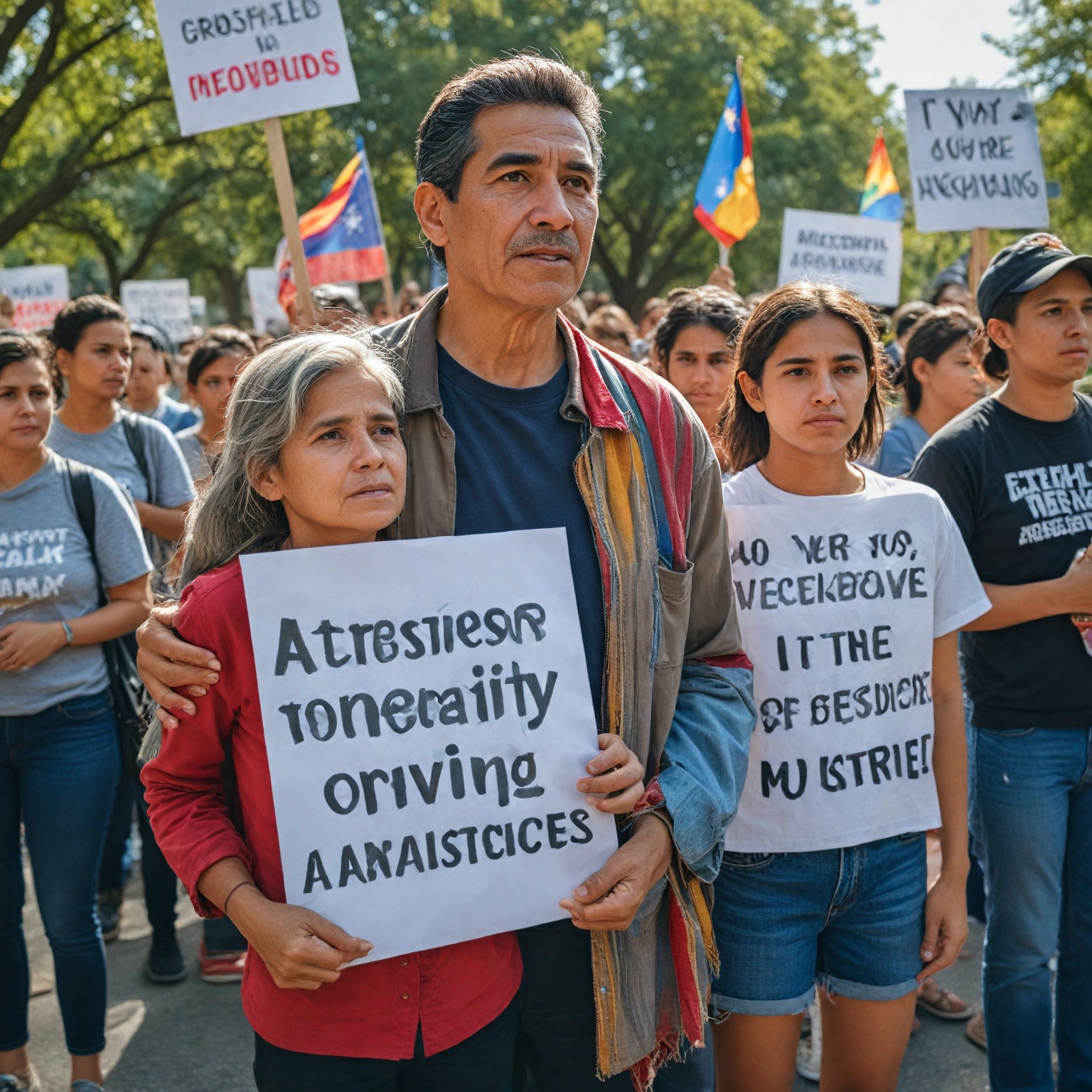
Community organizations, particularly within Venezuelan migrant populations, held public demonstrations denouncing the administration’s efforts to end TPS. A notable protest occurred in Doral, Florida, where activists highlighted the human impact of the policy change and called for the reinstatement of protections. Immigrant rights supporters also rallied outside federal courts, particularly in San Francisco, to oppose the administration’s attempts to roll back deportation safeguards for Venezuelans and Haitians.
Media coverage underscored the divisive nature of the decision. Some reports framed the Court’s ruling as a victory for executive authority and national security interests, consistent with the Trump administration’s emphasis on curbing unauthorized immigration and prioritizing American interests abroad. White House spokesperson Abigail Jackson reiterated the administration’s position, stating that TPS is inherently temporary and not intended as a pathway to permanent residency
The content is provided by Avery Redwood, 11 Minute Read


