
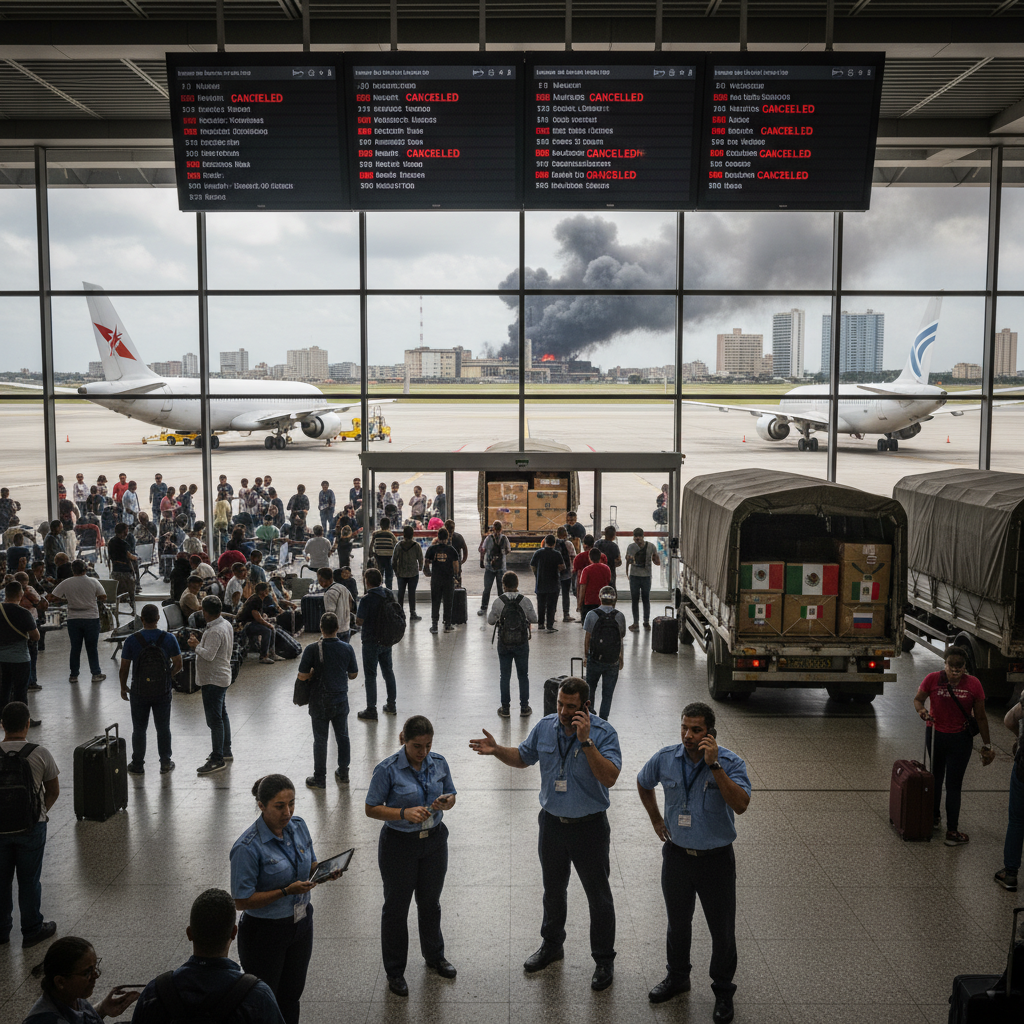
Summary of the Jet Fuel Crisis
The 2026 Cuban jet fuel crisis has severely impacted the nation’s aviation and economy due to halted fuel shipments from Venezuela, a consequence of U.S. military actions and subsequent sanctions. The crisis intensified after a fire at a Havana fuel processing plant and the shutdown of Cuba’s aging energy infrastructure led to a suspension of aviation fuel from February 10 to March 11, 2026, disrupting air travel and tourism, while prompting austerity measures across the island. International responses have been mixed, with humanitarian aid from Mexico and support from Russia and China, while the U.S. maintains its sanctions as a means of exerting pressure on the Cuban government.
Background of Dependence on Fuel Imports
Cuba’s reliance on Venezuela for jet fuel has become a critical vulnerability, particularly after the U.S. operation ousted Venezuelan President Nicolás Maduro and cut off Cuba’s main fuel source. The effects were compounded by a fire at a processing plant and the cessation of Mexican oil shipments following U.S. threats of tariffs. The shortage of fuel reserves led to immediate impacts on aviation, causing major airlines to cancel flights and altering the operational landscape amidst ongoing socio-economic challenges.
Causes of the Jet Fuel Shortage
The fuel crisis primarily stems from intensified U.S. sanctions and Cuba’s historical dependency on foreign suppliers like Venezuela and Mexico. Disruptions in Venezuelan fuel shipments and Mexico’s subsequent suspension of exports due to U.S. pressure further tightened Cuba’s access to essential fuel. As a result, aviation authorities warned of fuel shortages across multiple airports, prompting airlines to reduce or cancel flights, which has severely impacted Cuba’s tourism-dependent economy.
Impacts of the Shortage on Air Travel and Economy
This fuel crisis has led to widespread disruptions in air travel, with major Canadian airlines like Air Canada and WestJet cancelling flights and reorganizing their operations due to anticipated shortages. The inability to secure reliable jet fuel has forced airlines to recalibrate their schedules, thereby straining Cuba’s connectivity vital for tourism.
Broader Socio-Economic Ramifications
The crisis extends beyond air travel, severely affecting public transportation and daily life on the island. The suspension of services and cultural events, alongside cutbacks to public access and transportation, has intensified the socio-economic hardships faced by Cubans. President Díaz-Canel’s acknowledgment of these challenges illustrates the profound impact of fuel shortages on the national landscape.
Government and International Responses
The Cuban government has implemented rationing measures, prioritizing healthcare and transport, and sought international assistance, notably from Russia and China, to alleviate woes from the sanctions. Meanwhile, airlines have looked to bypass fuel shortages through strategies like arranging refueling stops in nearby countries, although this complicates travel logistics and increases operational costs.
Current Status and Outlook
As Cuba confronts substantial fuel shortages that continue into mid-March 2026, the aviation sector is adapting, but concerns remain regarding the long-term implications for air travel and economic stability. Ongoing geopolitical tensions and intensified sanctions from the U.S. signal a challenging future, suggesting that unless fuel supply chains are restored, Cuba’s crisis may deepen.
The content is provided by Sierra Knightley, 11 Minute Read


