
Summary
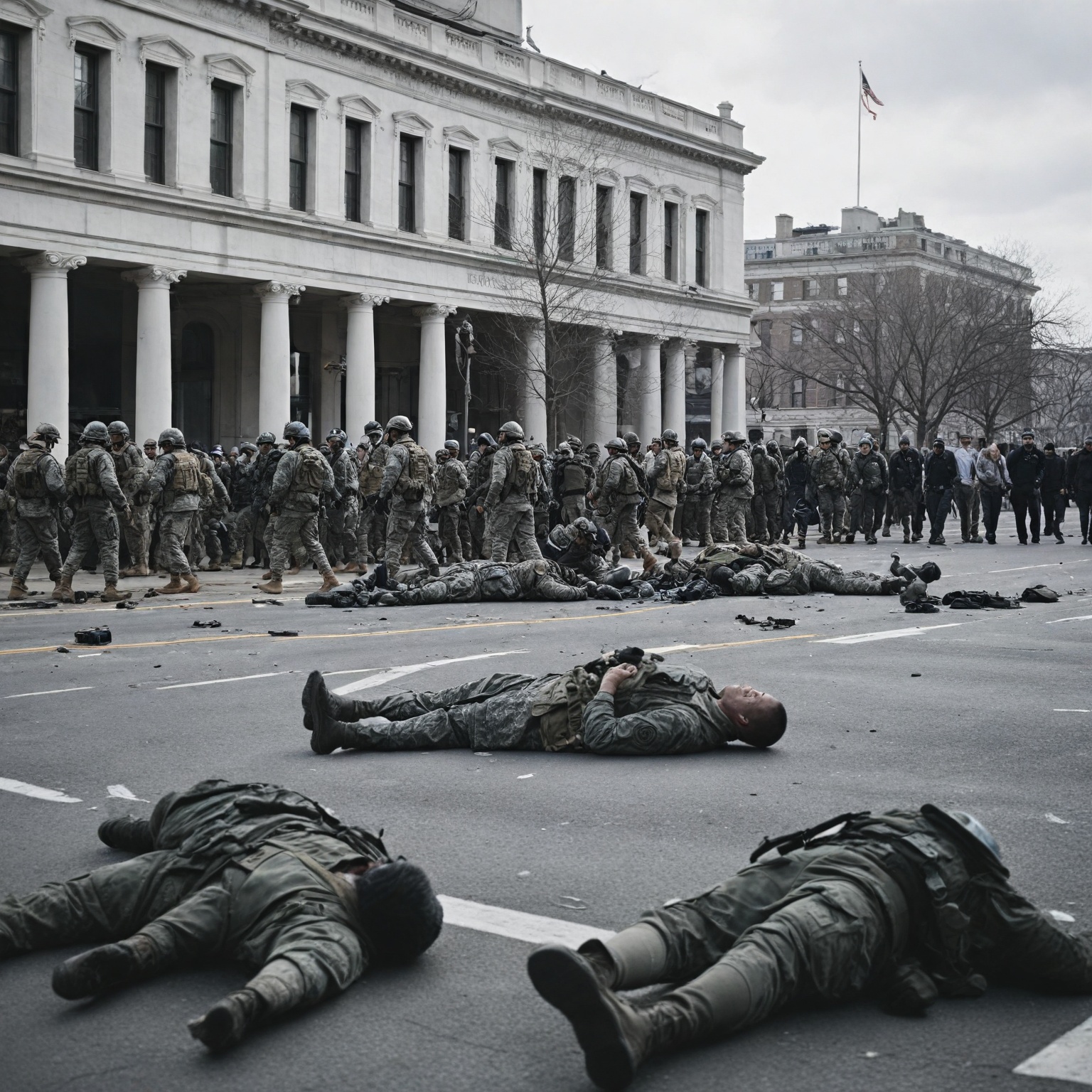
The National Guard Soldiers Targeted in Shocking Attack Near the White House refers to a November 26, 2025, shooting incident in Washington, D.C., in which two members of the West Virginia National Guard were ambushed and critically wounded while conducting a high-visibility patrol near Farragut Square, just a few blocks from the White House. The attack, carried out by Rahmanullah Lakanwal, an Afghan national residing in Washington state, drew national attention due to its proximity to the nation’s executive residence and the perceived targeting of federal security personnel. The incident prompted a swift response from multiple federal law enforcement agencies, including the FBI, U.S. Marshals, and ATF, who coordinated to secure the area and launch a federal investigation.
The deployment of National Guard troops in Washington, D.C., which began in August 2025 under an order from then-President Donald Trump as part of an intensified crackdown on street crime and immigration enforcement, had been controversial prior to the attack. Legal challenges questioned the president’s authority over the D.C. National Guard, leading to a federal judge ruling the deployment likely illegal for infringing on the city’s self-governance rights. The shooting underscored the risks faced by Guardsmen assigned to visible patrols in highly sensitive urban areas and intensified debates about the Guard’s role in civilian law enforcement operations within the capital.
Rahmanullah Lakanwal, who had entered the United States in 2021 and received asylum approval in 2025, was arrested at the scene after exchanging gunfire with National Guard members and law enforcement. His motives remain under investigation, but the attack was prosecuted as a federal assault on law enforcement officers. The suspect’s background and immigration status triggered political controversy, with former President Trump condemning the attack as terrorism linked to immigration policies, while community leaders cautioned against stigmatizing Afghan immigrants broadly.
In the aftermath, heightened security measures were implemented around the White House and across Washington, D.C., including plans to deploy an additional 500 National Guard personnel to bolster protection. The shooting elicited bipartisan condemnation from political leaders and renewed public discourse on the balance between security needs and the legality and ethics of militarized deployments in the capital. The incident remains a notable and somber example of the challenges confronting National Guard troops in urban security roles amid evolving threats.
Background
The National Guard troops had been deployed to Washington, D.C., since August 2025, following an order from then-President Donald Trump as part of a broader initiative to crack down on street crime and intensify immigration enforcement in the capital and other areas. In addition to the D.C. National Guard, several other states, including West Virginia, sent troops to assist with the deployment. This deployment was met with opposition from local officials and Democrats, who questioned the legality and appropriateness of the president’s authority over the D.C. National Guard. A federal district judge ruled that the deployment was likely illegal and violated the city’s rights to self-governance and limited the president’s authority to assert total control over the local Guard forces.
The National Guard is a state-based military force consisting of hundreds of thousands of trained soldiers who typically serve part-time but can be activated during emergencies such as natural disasters, wars, or civil unrest. Troops assigned to Washington, D.C., were often tasked with highly visible patrols in busy public areas, including locations near the White House. Some former National Guard leaders had expressed concerns over troop safety during these assignments, fearing that the visible presence could make soldiers targets for attacks.
The area around Farragut Square and the nearby intersections of 17th and I streets—where the attack occurred—is a bustling lunch spot for office workers and lies just a few blocks from the White House, a site under extensive security and protection primarily provided by the United States Secret Service. This location had previously seen heightened security incidents, reflecting ongoing challenges in securing the vicinity of the nation’s executive residence and offices.
Following the shooting incident targeting two National Guard soldiers, multiple federal law enforcement agencies, including the FBI, U.S. Marshals, and the Bureau of Alcohol, Tobacco, Firearms and Explosives (ATF), responded swiftly to secure the area and investigate the attack. The incident further underscored the tensions and complexities surrounding the Guard’s deployment and the risks posed to troops carrying out patrols in the nation’s capital during this period.
The Attack
On November 26, 2025, two members of the West Virginia National Guard were ambushed and shot near the corner of 17th and I Streets, just a few blocks from the White House in Washington, D.C. The soldiers were part of a high-visibility patrol conducting security operations in the area around 2:15 p.m. EST (19:15 GMT), near the Farragut West Metro station and Farragut Square, a busy transit hub and popular lunch spot for office workers.
The suspect, later identified as Rahmanullah Lakanwal, a 29-year-old Afghan national who entered the United States in September 2021 and was residing in Washington state, reportedly ambushed the soldiers and opened fire at close range in what officials described as a targeted attack. After an exchange of gunfire, other National Guard members and law enforcement personnel intervened and subdued the suspect, who was subsequently shot four times and taken into custody.
Both wounded soldiers were transported to local hospitals where they were reported to be in critical condition. The FBI, led by Director Kash Patel, took charge of the investigation and announced that the attack would be prosecuted federally as an assault on federal law enforcement officers. Washington Mayor Muriel Bowser condemned the incident as a “targeted shooting” and highlighted the rising trend of ambush-style attacks against law enforcement personnel in 2025.
The shooting caused heightened security measures, including a brief lockdown of the White House, although no known connection between the suspect and the White House itself was established at the time. Witnesses in the vicinity reported chaotic scenes, with law enforcement rapidly responding and evacuating bystanders, including children, from the area. The Joint Task Force – District of Columbia, responsible for coordinating National Guard deployments in the capital, issued statements praising the injured soldiers as heroes and offering support for their recovery.
Suspect
The suspect in the attack on two National Guard members near the White House has been identified as Rahmanullah Lakanwal, an Afghan national who entered the United States in 2021. He is believed to have acted alone during the incident, which occurred near the Farragut Metro stop at 17th and I Street NW, just a few blocks from the White House. Law enforcement officials revealed that Lakanwal had applied for asylum in December 2024 while residing in Washington state, and his application was approved on April 23, 2025, during the Trump administration.
Authorities recovered a handgun believed to have been used in the shooting, though it remains unclear how and when Lakanwal obtained the firearm, especially given U.S. laws restricting gun sales to non-citizens and non-permanent residents. At the time of his arrest, the suspect was uncooperative and was found without identification. Multiple law enforcement sources described the attack as an ambush; the suspect approached the two guardsmen performing high-visibility patrols, raised a firearm, and fired directly at them, injuring both critically.
Following the incident, President Trump, who was at his resort in Florida, condemned the attack, labeling it “an act of evil, an act of hatred and an act of terror” and emphasizing the suspect’s status as a foreign national from Afghanistan. In the aftermath, Trump called for a re-examination of immigration policies concerning Afghan nationals entering the United States, particularly those seeking asylum or other immigration benefits. The Department of Homeland Security confirmed the suspect’s identity but withheld additional details of his immigration record.
Community leaders and advocacy groups acknowledged the suspect’s actions while cautioning against stigmatizing the broader Afghan immigrant population, highlighting the extensive security vetting that Afghan immigrants undergo. Local officials, including D.C. Mayor Muriel Bowser, pledged to ensure that the suspect would face prosecution to the fullest extent of the law.
Response
The shooting of two National Guard soldiers near the White House on November 26, 2025, prompted immediate and widespread reactions from government officials, law enforcement agencies, and the public. Former President Joe Biden condemned the attack as “unacceptable” and offered prayers for the injured service members via the social media platform X. Similarly, House Minority Leader Rep. Hakeem Jeffries expressed gratitude for the first responders’ swift action in apprehending the suspect and prayed for the wounded Guardsmen.
Washington, D.C. Mayor Muriel Bowser described the incident as a “targeted shooting” and underscored the shock felt throughout the capital, emphasizing the high-security nature of the area where the attack occurred. She, along with other officials, took part in a press conference with FBI Director Kash Patel and Metropolitan Police Department Executive Assistant Chief Jeffery Carroll to provide updates and condemn the violence. Patel announced that the FBI would lead the federal investigation and that the assault would be prosecuted as an attack on federal law enforcement officers.
Vice President JD Vance addressed the shooting during a visit to Fort Campbell, Kentucky, noting that authorities were still investigating the suspect’s motive and continuing to gather information. Department of Homeland Security Secretary Kristi Noem confirmed her agency’s collaboration with local authorities in the ongoing investigation.
In the aftermath of the attack, the federal government announced plans to deploy an additional 500 National Guard personnel to the nation’s capital to bolster security. Meanwhile, local law enforcement and other agencies maintained a heightened presence around the White House and nearby areas, which included blocking streets and securing the perimeter.
The incident also sparked debate over the presence of National Guard troops in Washington, D.C., with some critics questioning their deployment and use. The White House strongly rejected claims that the Guard was being used for political purposes, emphasizing the tragedy and necessity of their role in maintaining security.
Aftermath and Impact
The shooting of two National Guard soldiers near the White House on November 26, 2025, led to a swift law enforcement response involving multiple agencies, including the U.S. Secret Service, FBI, ATF, and U.S. Marshals, with FBI Director Kash Patel confirming that the attack was under federal investigation and would be prosecuted as an assault on federal law enforcement officers. The two Guardsmen were reported to be in critical condition and hospitalized following the shooting.
In the wake of the attack, Washington, D.C., experienced heightened security measures, including increased deployment of National Guard troops. The administration announced plans to send an additional 500 Guard personnel to the capital to bolster security. This escalation came amid ongoing controversy over the legality of the National Guard’s deployment in Washington, D.C., which had been part of a broader anti-crime crackdown initiated by President Donald Trump earlier that year. A federal district judge had recently ruled that the deployment was likely illegal, citing violations of the city’s self-governance rights and limits on presidential authority over the D.C. National Guard; this ruling had temporarily paused the deployment but was under appeal at the time of the shooting.
Public and political reactions were marked by shock and bipartisan outrage. House Minority Leader Hakeem Jeffries expressed prayers for the wounded Guardsmen and gratitude for the prompt action of law enforcement and first responders. Vice President remarks highlighted the vital role of soldiers, including the National Guard, as both protectors and symbols of national security. Meanwhile, local officials, including Mayor Muriel Bowser, condemned the attack as a “targeted shooting” and underscored the vulnerability exposed by an assault occurring in one of the nation’s most heavily secured areas.
The shooting also renewed debate about the role and risks faced by National Guard members deployed in civilian law enforcement operations. Some Guardsmen, especially those who had served in prior deployments such as the immigration enforcement mission in Los Angeles, voiced concerns about increased exposure to violence and the potential for incidents involving civilians. The attack was seen by many as a somber reminder of the dangers confronting National Guard troops operating in urban security roles during periods of civil unrest and heightened threat levels.
Media Coverage
The shooting of two National Guard soldiers near the White House garnered extensive media attention, highlighting the incident’s severity and the broader implications for security in the nation’s capital. Major news outlets quickly reported on the event, emphasizing its location near highly secured government sites, including Lafayette Square and the Farragut West Metro station, and the critical condition of the victims as confirmed by FBI Director Kash Patel.
Local and national officials were prominently featured in the coverage. Washington, D.C. Mayor Muriel Bowser described the attack as a “targeted shooting,” expressing shock at the brazen nature of the assault in one of the country’s most protected areas. The FBI announced it would lead the investigation and pursue federal charges, treating the case as an assault on a federal law enforcement officer. The incident prompted a lockdown of the White House and surrounding areas, which was widely reported and captured in photographs depicting the immediate aftermath and response.
Political leaders, including then-President Joe Biden, responded publicly on social media, condemning the attack as “unacceptable” and offering prayers for the injured Guardsmen. Media commentary also reflected on the deployment of National Guard troops in Washington, D.C., with some journalists criticizing their presence as a “political show,” a point met with rebuttals from White House officials emphasizing the tragedy and necessity of their service.
Community and advocacy groups related to Afghan immigrants, such as the coalition AfghanEvac, weighed in on the narrative surrounding the attack, urging that the shooter be held accountable while cautioning against stigmatizing entire communities, particularly highlighting the rigorous security vetting undergone by Afghan arrivals to the United States.
The content is provided by Avery Redwood, 11 Minute Read


